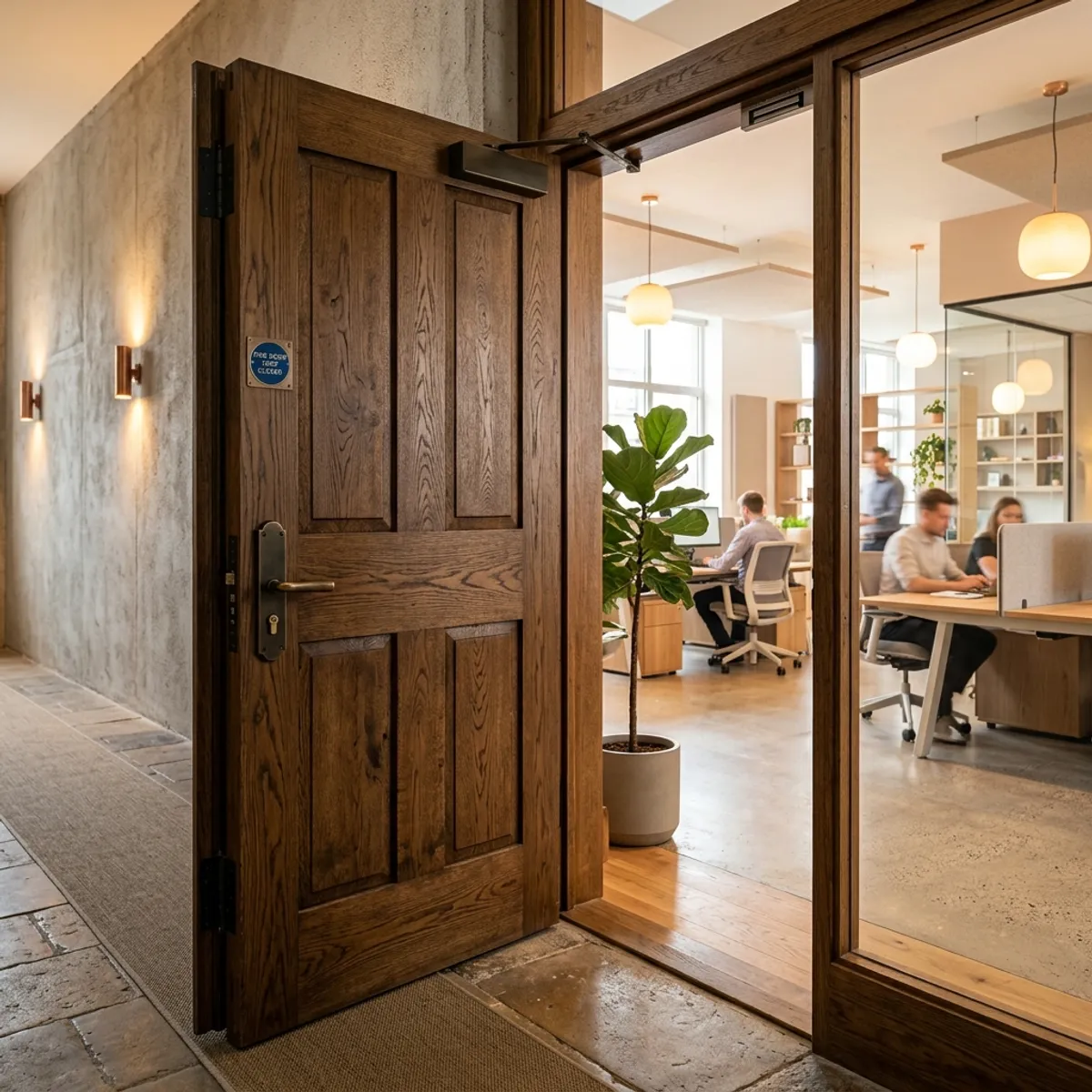
When refurbishing a historic building or trying to cut costs on a commercial project, property owners often ask: “Can I just upgrade my existing standard doors to fire doors using special paint?”
While it is technically possible to upgrade certain solid timber doors to offer 30 minutes of fire resistance, the modern compliance landscape has made this process incredibly risky, highly complex, and often more expensive than simply replacing the doors.
Here is what you need to know before attempting to upgrade a standard door in Wales.
The Problem with “Upgrading”
A certified fire door is an engineered piece of safety equipment. The door leaf, the hinges, the frame, and the intumescent seals are all tested together in a furnace to prove they can withstand a fire.
When you attempt to upgrade a standard door, you are removing that certainty. You are relying on retrofitted products to mimic the performance of an engineered door.
Intumescent Paints and Varnishes
There are paints and varnishes on the market designed to improve the fire resistance of timber. However:
- They only work on specific types of solid, dense timber (like thick oak). They will not work on hollow-core doors, MDF, or thin panel doors.
- The paint must be applied to an exact thickness (measured in microns) by a certified specialist.
- Even if applied correctly, it is extremely difficult to legally prove the upgraded door will perform to FD30 standards during an inspection.
Upgrading the Frame and Hardware
A fire door is only as good as its frame. Upgrading a door isn’t just about painting the wood; you must also:
- Rout out the existing door frame to install intumescent seals (a highly labor-intensive process).
- Replace all standard hinges with certified fire-rated hinges (minimum of three).
- Install a certified overhead door closer.
- Replace any standard glass panels with specialized fire-rated glazing and intumescent glazing tape.
The Certification Issue
The biggest hurdle in upgrading standard doors is certification.
Under the Fire Safety Act, the Responsible Person must be able to prove that the building’s fire doors are compliant. A brand new fire door comes with a BM TRADA or BWF-CERTIFIRE label, providing instant, irrefutable proof of its fire rating.
An upgraded door has no such label. Unless the upgrade was carried out by a highly specialized, certified contractor who provides extensive documentation proving the specific door and frame combination meets FD30 standards, a fire inspector is likely to fail the door during an audit.
When Does Upgrading Make Sense?
The only time upgrading is generally recommended is in heritage or listed buildings, where the law requires the preservation of the original historic doors. In these rare cases, specialized contractors use intumescent paints, veneers, and hidden intumescent paper to preserve the door’s look while improving its fire resistance.
The Cost-Effective Solution: Replacement
For 99% of commercial properties, offices, and residential flats in South Wales, the safest, most legally secure, and most cost-effective option is to replace the doors.
Installing a pre-hung, fully certified FD30 or FD60 fire door set guarantees compliance. It removes the guesswork, satisfies fire inspectors, and most importantly, ensures the safety of the building’s occupants.
At VYR Doors, we provide premium fire door replacements that blend seamlessly with your interior design, without compromising on safety. Contact us for a free replacement quote.