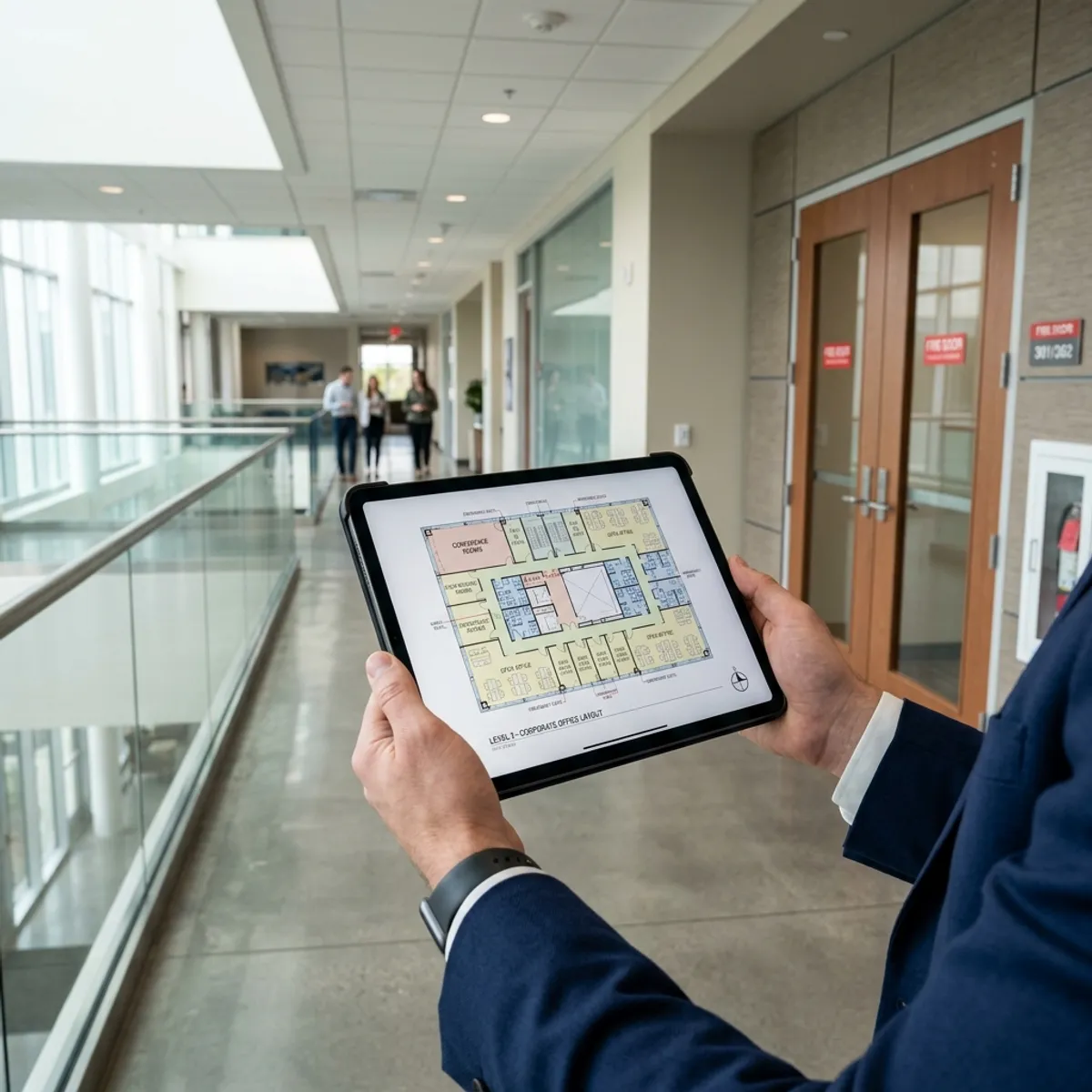
The knock at the door from a Fire Safety Inspecting Officer can be a source of major anxiety for building managers and landlords. In Wales, local Fire and Rescue Services actively conduct audits to ensure commercial properties and multi-occupancy residential buildings comply with the Regulatory Reform (Fire Safety) Order 2005.
Failing a fire safety audit can result in enforcement notices, massive fines, or in severe cases, the immediate closure of your premises.
The best way to handle an audit is to be proactively prepared. Here is a step-by-step guide to ensuring your building is ready.
1. Update Your Fire Risk Assessment (FRA)
Your Fire Risk Assessment is the foundation of your building’s safety strategy. The very first thing an inspector will ask for is your FRA documentation.
- Is it current? Your FRA should be reviewed at least annually, or immediately after any significant changes to the building layout, occupancy, or usage.
- Have you actioned the findings? An FRA is useless if it simply sits in a drawer. If your last assessment highlighted that the fire doors on the second floor needed adjusting, you must have proof that the work was completed.
2. Compile Your Digital Audit Trail
Inspectors want to see a clear, organized history of maintenance. If you tell an inspector “we check the doors every month,” they will reply, “prove it.”
- Maintenance Logs: Have your maintenance logs readily available. This includes records for the fire alarm system, emergency lighting, and fire extinguishers.
- Fire Door Registers: You should have a dedicated register for every fire door in the building, logging its unique ID, its location, and the date of its last professional compliance check.
At VYR Doors, we provide our clients with fully documented digital reports, including timestamped photographic evidence, specifically designed to satisfy fire safety audits.
3. Check the Escape Routes
Escape routes must be completely sterile and clear of obstructions at all times.
- Remove clutter: Ensure corridors, stairwells, and exits are entirely free of boxes, furniture, or rubbish. A blocked escape route is an instant fail.
- Check the signage: Are all emergency exit signs illuminated and clearly pointing toward the nearest escape route?
- Emergency lighting: Test the emergency lighting to ensure it functions correctly if the main power fails.
4. Conduct a Pre-Audit Fire Door Sweep
Fire doors are heavily scrutinized during an audit because they are the primary means of compartmentalizing a fire. Walk your building and check the following:
- Are any doors wedged open? This is a critical offense. Remove any wedges or objects propping open fire doors immediately.
- Do they close properly? Open every fire door and let it go. It must close firmly onto the latch under its own power.
- Are the gaps correct? Check that the gaps around the top and sides of the doors are no larger than 4mm.
5. Staff Training Records
If you manage a commercial property with staff, the inspector will want to know that your employees understand what to do in an emergency.
- Ensure your fire warden training records are up to date.
- Have a log of your recent fire evacuation drills.
Get Expert Help Before the Audit
If you are unsure about the state of your fire doors, do not wait for the inspector to find the faults.
The experts at VYR Doors can conduct a comprehensive pre-audit inspection of all fire doors in your premises across South Wales. We will identify any compliance failures and carry out the necessary remedial work, giving you total peace of mind.
Contact us today to book your compliance check.