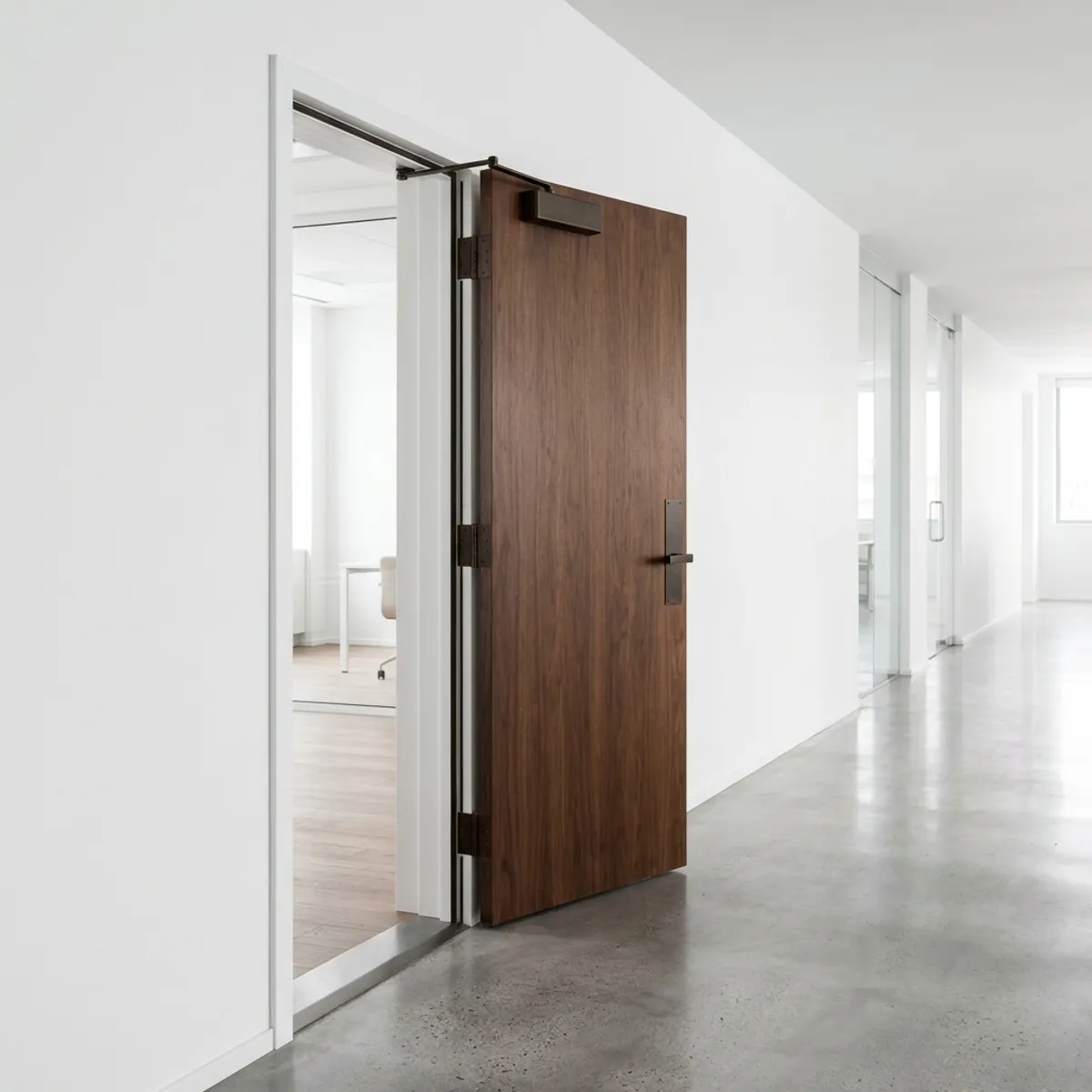
When people think of a fire door, they usually picture the heavy, solid wood core. While the core provides the primary resistance against flames, a fire door is practically useless without a tiny, often overlooked component: the intumescent seal.
If you look at the edge of your fire door (or the inside of the door frame), you’ll likely see a thin plastic strip running all the way around the top and sides. That strip is the intumescent seal, and it is the key to preventing the spread of a fire.
How Do Intumescent Seals Work?
The word “intumescent” means to swell or expand when heated.
In the early stages of a fire, the heat in a room rises rapidly. Once the ambient temperature reaches roughly 150°C to 200°C (depending on the specific chemical compound used in the seal), a chemical reaction is triggered inside the plastic casing.
The material inside the seal rapidly expands to many times its original thickness. As it expands, it completely fills the 2mm to 4mm gap between the door and the frame. This creates a solid, heat-resistant char that literally locks the door into its frame.
This tight seal serves two critical purposes:
- It stops flames from burning through the gaps.
- It stops the passage of hot, toxic gases from spreading into escape routes.
Smoke Seals vs. Intumescent Seals
It’s important to understand that standard intumescent seals do not stop cold smoke. Before a fire gets hot enough to trigger the seal to expand, highly toxic cold smoke can easily pass through the gaps around the door.
This is why many doors are specified as FD30S or FD60S. The “S” stands for Smoke. These doors use a combined intumescent and smoke seal—typically an intumescent strip that also features a nylon brush or rubber fin.
The brush provides a constant physical barrier against cold smoke from the moment the door is closed, while the intumescent material waits to expand when the heat arrives.
Signs Your Seals Need Replacing
Intumescent seals are incredibly durable, but they do degrade over time or suffer from physical damage in high-traffic areas. You should check your seals regularly:
- Are they painted over? If a decorator has painted over the seal, the paint will harden the casing and prevent it from expanding properly. Painted seals must be completely replaced.
- Are sections missing? If chunks of the plastic casing have broken off or been gouged out, the seal will fail to create a continuous barrier.
- Is the brush worn? On smoke seals, the nylon brushes can wear down from the friction of opening and closing the door. If the brush no longer touches the frame when the door is closed, it will not stop cold smoke.
Professional Maintenance
Replacing intumescent seals might seem simple, but it must be done correctly. The replacement seal must match the precise specification of the door’s original certification. Mixing and matching seal types (e.g., using a seal that expands too much and forces the door open) can lead to catastrophic failure.
At VYR Doors, we provide expert fire door maintenance, including certified seal replacements across South Wales. Contact us today to ensure your doors are fully compliant.