A fire door is not just a slab of heavy wood. It is a complete, engineered system. If even a single piece of hardware on the door fails or is swapped out for a non-certified alternative, the entire door loses its fire rating.
During a fire compliance inspection, the hardware is scrutinized just as closely as the door itself. Here is a breakdown of the critical hardware components required on a commercial fire door in the UK.
1. Fire-Rated Hinges
Standard internal doors usually hang on two lightweight hinges. A fire door requires something much stronger.
- The Rule of Three: Every fire door must be fitted with a minimum of three fire-rated hinges. This is because the intense heat of a fire causes wooden doors to warp and bow. Three heavy-duty hinges are required to hold the door firmly against the frame and prevent it from buckling.
- Material: Hinges must be made of materials with a high melting point, typically grade 13 stainless steel. They must also bear the CE or UKCA mark to prove they meet fire safety standards (BS EN 1935).
- Intumescent Hinge Pads: In many FD60 (and some FD30) installations, the hinges must be backed with thin intumescent pads. Because metal conducts heat rapidly into the wooden frame, these pads expand to prevent the wood around the hinge from catching fire prematurely.
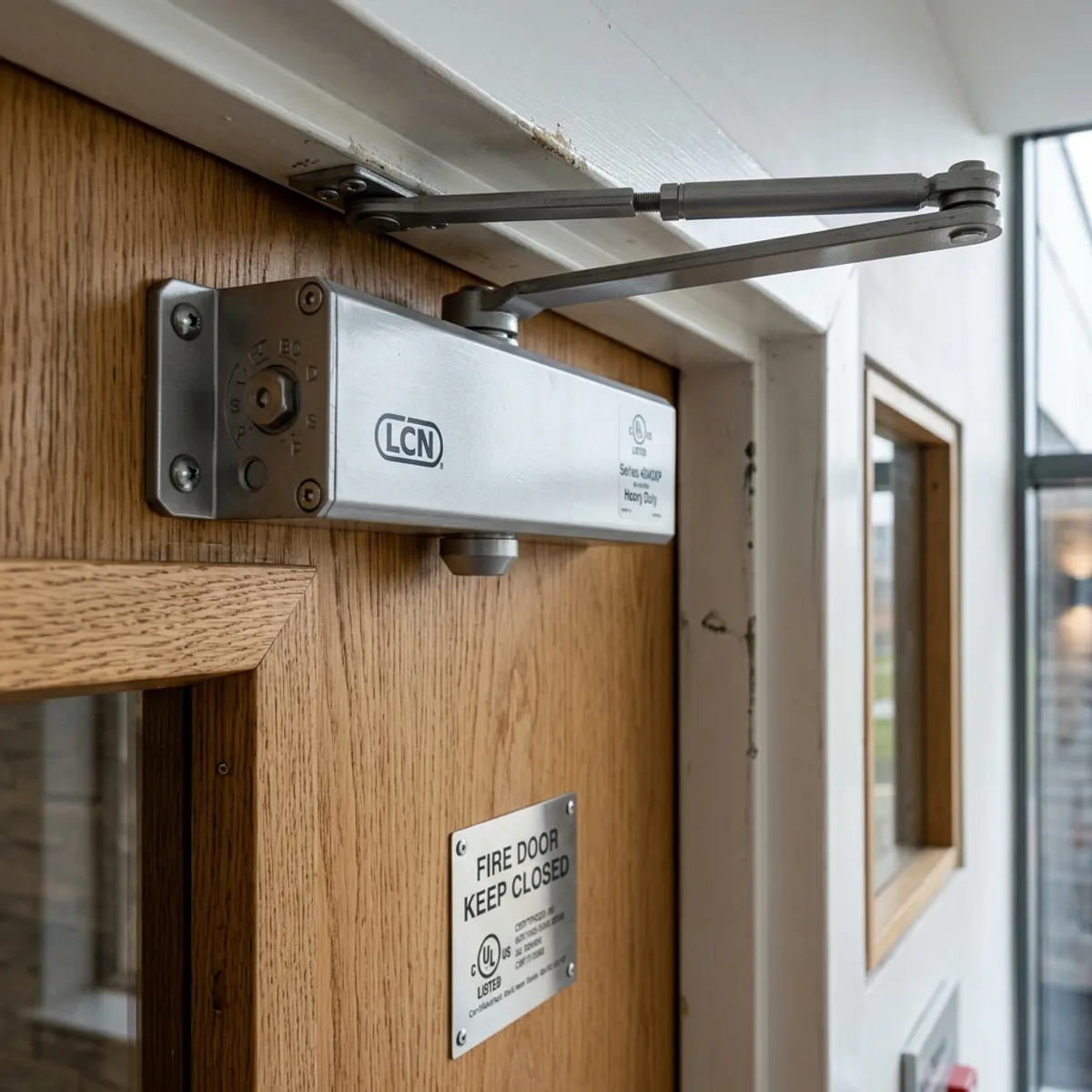
2. Overhead Door Closers
A fire door is entirely useless if it is left open during a fire.
- Self-Closing Requirement: All fire doors (with very few exceptions, such as locked service cupboards) must be fitted with a self-closing device.
- The Mechanism: The most common type is the hydraulic overhead closer. It must be strong enough to overcome the resistance of the door’s latch and the air pressure in the room, ensuring the door clicks shut firmly every single time.
- Adjustability: The closing speed and the “latching action” (the final push to click the door shut) must be carefully calibrated by a professional installer. If it closes too fast, it will slam and damage the frame; too slow, and it may not latch.
3. Fire-Rated Locks and Latches
When a fire breaks out, the door must stay firmly shut. If the latch melts or fails, the air pressure created by the fire will blow the door open.
- Certified Components: The lock or latch must be CE/UKCA marked and tested to BS EN 12209.
- Intumescent Protection: Just like hinges, the mortice cut into the door to house the lock removes a significant amount of the door’s protective core. This void must often be wrapped in an intumescent lock kit to prevent fire from burning straight through the mechanism.
4. Signage
While not technically “hardware,” correct signage is a legal requirement on all non-domestic fire doors.
- “Fire Door Keep Shut”: This blue circular sign must be placed on both sides of a standard fire door.
- “Fire Door Keep Locked Shut”: Used for doors to storage rooms or electrical cupboards that are kept locked.
The Danger of DIY Replacements
The biggest mistake property managers make is treating fire door hardware like standard hardware. If a hinge squeaks or a closer breaks, they might send a general handyman to buy a cheap replacement from a local DIY store.
This is illegal and voids your fire certification. All replacement hardware must be specifically compatible with the door’s original certification.
At VYR Doors, our specialists carry the correct, certified hardware to repair and maintain commercial fire doors across South Wales. We ensure your doors function perfectly and remain 100% legally compliant. Get in touch to book a hardware inspection.